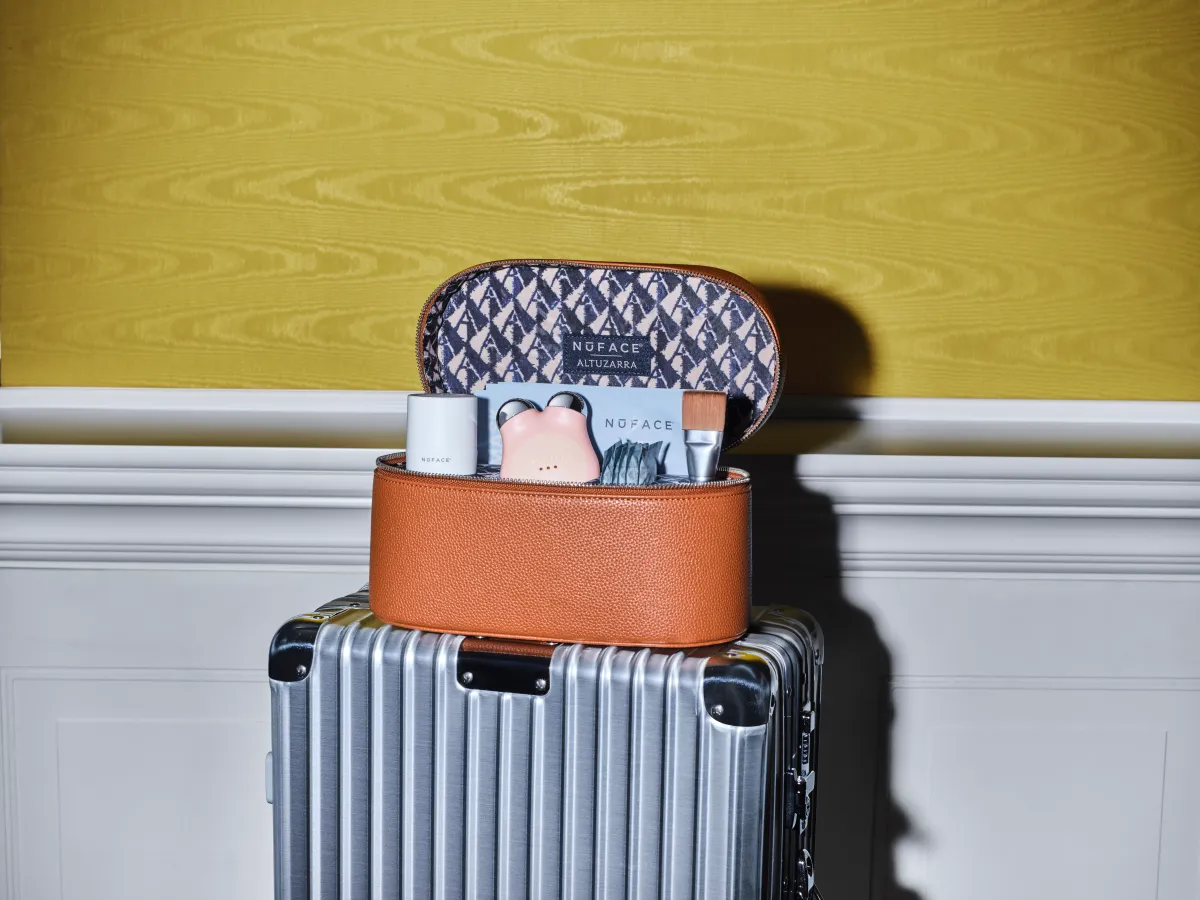
NuFace, the microcurrent beauty device brand owned by Unilever, has entered the fashion collaboration space with designer Joseph Altuzarra. The partnership debuts a limited-edition NuFace Mini+ device bundled with curated skincare essentials, all housed in a co-branded luxury case designed by Altuzarra.
This move marks NuFace's first fashion partnership and reflects a broader trend in the beauty industry. Device makers and skincare brands increasingly seek designer credibility and lifestyle positioning. Altuzarra's involvement elevates NuFace beyond functional beauty tech into aspirational luxury territory. The designer's aesthetic sensibility shapes the packaging and presentation rather than the device itself, which remains NuFace's proven microcurrent technology.
The Mini+ is NuFace's handheld microcurrent device, smaller than the flagship Spa model but larger than its first Mini iteration. It sends low-level electrical currents across facial muscles to stimulate and lift skin. The device requires regular use.paired with conductive gel or serum to function. NuFace sells the Mini+ separately for around $200 to $300 depending on promotions. A bundle with skincare typically costs more.
Altuzarra, known for tailored clothing with dramatic silhouettes and bold colors, brings design authority to the collaboration. His luxury positioning in fashion translates directly to how beauty brands market premium positioning. Packaging design, case materials, and visual identity carry weight with affluent consumers who view beauty tools as lifestyle objects rather than purely functional purchases.
Limited-edition beauty collaborations generate urgency and collectibility. Brands use scarcity and designer cachet to justify premium pricing and create social media momentum. Dyson's recent luxury beauty partnerships, Shark's designer hair tool collaborations, and prestige skincare brands' capsule releases all follow this playbook. Fashion designers bring storytelling and aesthetic narrative that traditional beauty marketing sometimes lacks.
The skincare essentials bundled with the device matter here too. NuFace typically recommends conductive gels and hydrating serums to maximize microcurrent efficacy. A curated selection creates a complete regimen around the device itself. Whether these are existing NuFace formulas repackaged for this collaboration or new products remains unclear, but bundling ensures customers have the right products from day one.
This partnership also signals Unilever's confidence in NuFace's growth trajectory. The parent company acquired NuFace in 2018 as part of its broader premium beauty push. Investment in designer collaborations suggests the brand has moved beyond early-adopter status into mainstream luxury positioning. NuFace now competes with established device brands like Clarisonic and newer entrants like Foreo in a crowded market. Fashion credibility helps differentiate.
Altuzarra's participation also reflects how fashion designers view beauty tools differently than traditional skincare. A device case becomes an accessory, something displayed on a vanity or carried in a bag. This visual component appeals to designers trained to think about product as object. It's why fashion collaborations in beauty increasingly focus on tools and devices rather than liquid or powder products alone.
Expect the limited-edition set to sell through quickly given collector appeal and scarcity positioning. For NuFace, this collaboration extends brand reach beyond beauty-first consumers into fashion-forward audiences who may not have considered microcurrent devices before. For Altuzarra, it diversifies brand expression into wellness and beauty without requiring design of the functional product itself. Both brands win through alignment rather than invention.