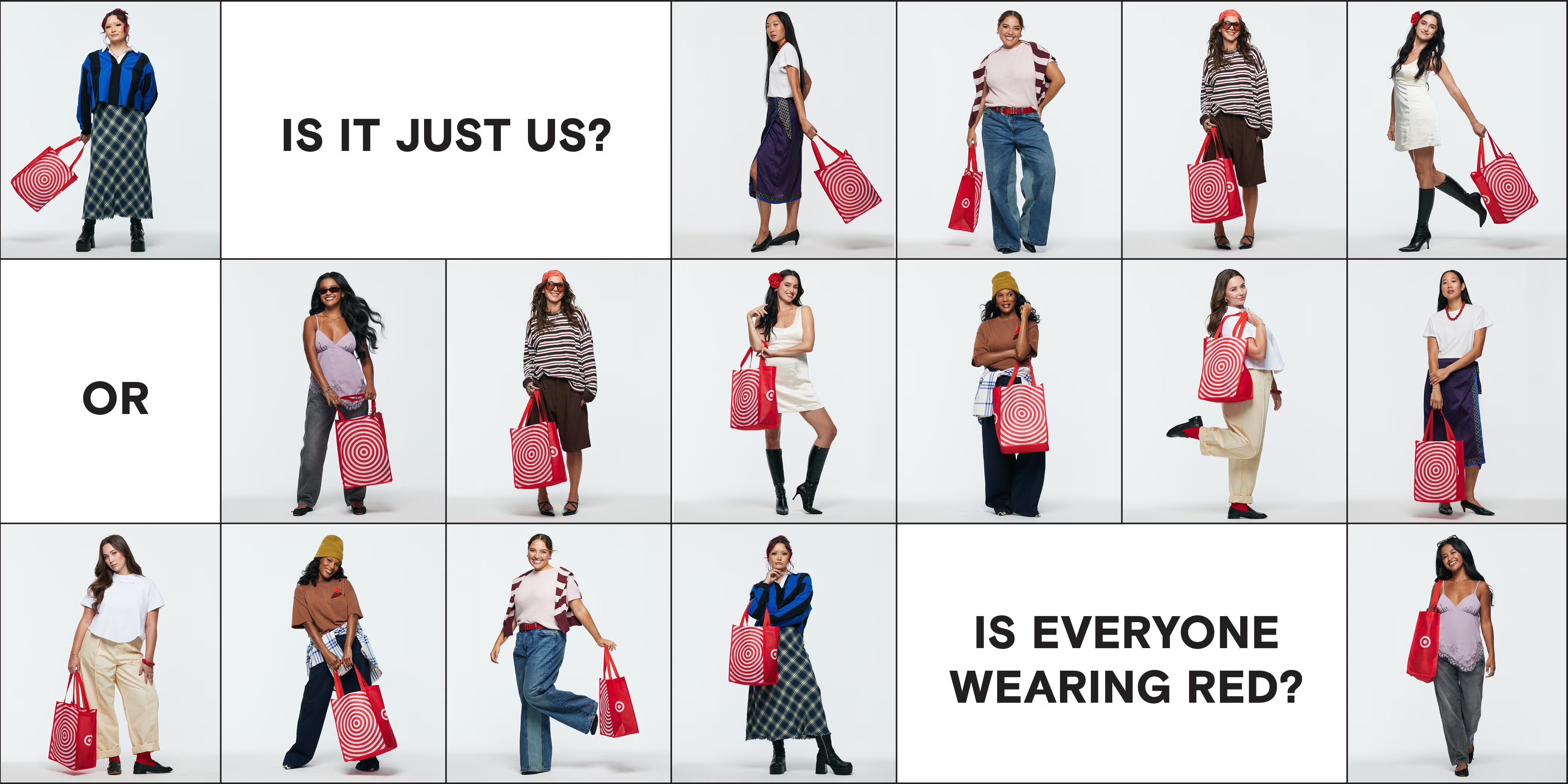
# Everyone's Carrying Target Bags on the Runway. Here's Why That Matters.
The humble Target shopping bag has become an unlikely status symbol during fashion week. Street-style photographers and tastemakers are spotting the red bullseye logo as frequently as designer handbags, signaling a seismic shift in how fashion-forward people think about accessories and brand prestige.
This isn't accidental. Fashion's gatekeepers have long used accessories to telegraph taste and wealth. For decades, that meant visible logos from Hermès, Louis Vuitton, or Gucci. The Target bag trend inverts that equation entirely. It celebrates accessibility and irony simultaneously. Carrying a Target bag at fashion week says something specific: I'm confident enough in my style that I don't need to prove it through a five-figure purchase.
The shift reflects deeper cultural currents. Gen Z and younger millennials have grown up with unprecedented access to trend information. Influencers wear high-low mixing routinely. Fast fashion exists alongside luxury. The gatekeeping that once protected high fashion's exclusivity has crumbled. Brands like Shein, H&M, and Zara have democratized runway aesthetics. Target operates in that same universe, but with a distinctly American vernacular.
What makes the Target bag different from other fast-fashion accessories is its complete lack of pretense. A Balenciaga or Bottega Veneta bag carries inherited cultural capital. A Target bag carries anti-fashion credentials. It's the accessory equivalent of wearing Crocs ironically, except the irony has become genuine appreciation. The bag works because it's affordable, durable, and ubiquitous. Millions of people own one. Using it as a statement piece democratizes fashion itself.
This also reflects changing attitudes about sustainability and consumption. Buying less, buying better, or buying from accessible retailers all signal environmental consciousness. A Target bag suggests practicality over conspicuous consumption. That resonates with younger consumers who increasingly reject the disposability built into fast fashion while simultaneously rejecting luxury consumption as wasteful and tone-deaf.
The Target bag moment also reveals how social media shapes fashion narratives. Street-style photographers and editors decide what counts as fashion-worthy. When they photograph someone carrying a Target bag with the same reverence as a designer tote, they legitimize it instantly. That photograph circulates across platforms, gets reposted, discussed, and copied. A practical shopping bag becomes fashionable because tastemakers declare it so.
For Target itself, the phenomenon is free marketing gold. The brand doesn't need to launch a limited-edition "fashion collaboration" to benefit. The organic adoption by style influencers and photographers does the work. This differs sharply from designer partnerships that often feel manufactured. When fashion editors choose Target organically, authenticity sells better than any paid campaign.
The red bag won't stay trendy forever. Fashion moves quickly. But the underlying trend persists. High-low mixing, ironic consumption, and accessibility-as-aspiration have moved from niche to mainstream. The Target bag simply embodies what fashion already values: confidence over conformity, authenticity over logos, and the audacious idea that great style doesn't require great expense.