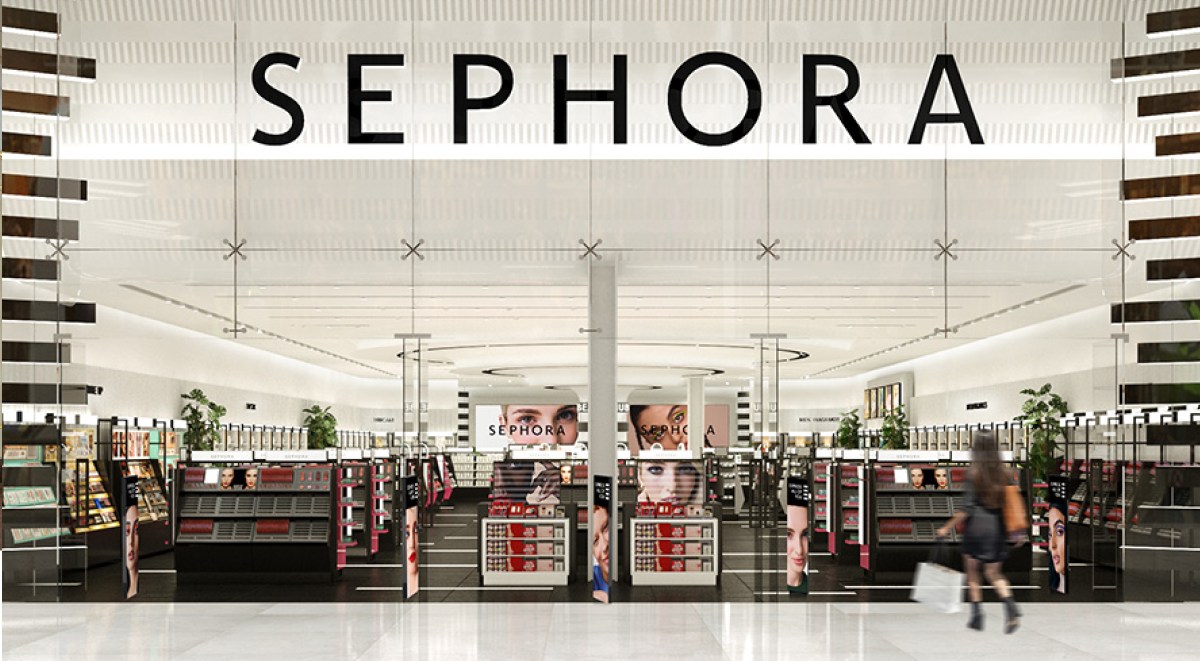
# Sephora Expands U.K. Footprint Through Marks & Spencer Partnership
Sephora accelerates its presence in the United Kingdom through a strategic partnership with Marks & Spencer, signaling the beauty retailer's commitment to penetrating one of Europe's most competitive markets. Catherine Spindler, president of Europe and Middle East operations at Sephora, outlined the company's vision during a recent interview, positioning the collaboration as a cornerstone of the brand's regional growth strategy.
The Marks & Spencer partnership represents a shift in Sephora's retail approach for the U.K., where the French beauty powerhouse previously maintained a smaller footprint compared to competitors like Space NK and Boots. By embedding Sephora shops within M&S stores, the retailer gains access to M&S's established customer base while reducing the financial burden of standalone locations. This model mirrors similar strategies Sephora has deployed across Europe, where shop-in-shop concepts provide flexibility and cost efficiency in mature markets.
Sephora currently operates across multiple channels in the U.K., including standalone stores, online operations, and now the M&S partnership. The Marks & Spencer collaboration introduces Sephora to a demographic that skews toward affluent, style-conscious shoppers who already frequent M&S for fashion and home goods. This cross-category positioning allows Sephora to capture incremental beauty purchases from customers not necessarily shopping for cosmetics at that moment.
The timing of this expansion aligns with broader shifts in European retail. Department stores like Marks & Spencer face pressure to refresh their beauty offerings and drive foot traffic. Sephora, meanwhile, seeks to build market share in a region where prestige beauty remains concentrated among established players. The partnership addresses both priorities simultaneously.
Spindler's role encompasses oversight of Sephora's operations across Europe and the Middle East, regions with vastly different retail maturity levels and consumer preferences. Her involvement in strategic U.K. expansion signals Sephora's seriousness about the market. The interview revealed little about specific store counts or timelines, but industry observers expect incremental M&S locations to roll out throughout 2024 and beyond.
The U.K. beauty market itself remains robust, valued in the billions. Prestige skincare, color cosmetics, and wellness categories continue to drive growth. Consumers increasingly expect seamless omnichannel experiences, combining online shopping, click-and-collect, and in-store exploration. Sephora's M&S integration positions the retailer to capture this demand across multiple touchpoints.
One consideration: Sephora's shop-in-shop model requires careful merchandising and staffing to maintain brand identity within another retailer's ecosystem. Training Marks & Spencer staff to deliver Sephora's service standards becomes essential. Success depends on whether M&S customers view the partnership as an enhancement or an intrusion into their shopping journey.
The broader European context matters too. Sephora operates differently across markets. Ulta Beauty's acquisition of Sephora's U.S. business freed resources for international expansion. Europe represents a significant growth opportunity, particularly in markets where Sephora's penetration remains below potential. The U.K. expansion under Spindler's leadership sets a template for how the retailer plans to compete in mature, crowded markets where standalone retail space carries higher costs and lower returns.