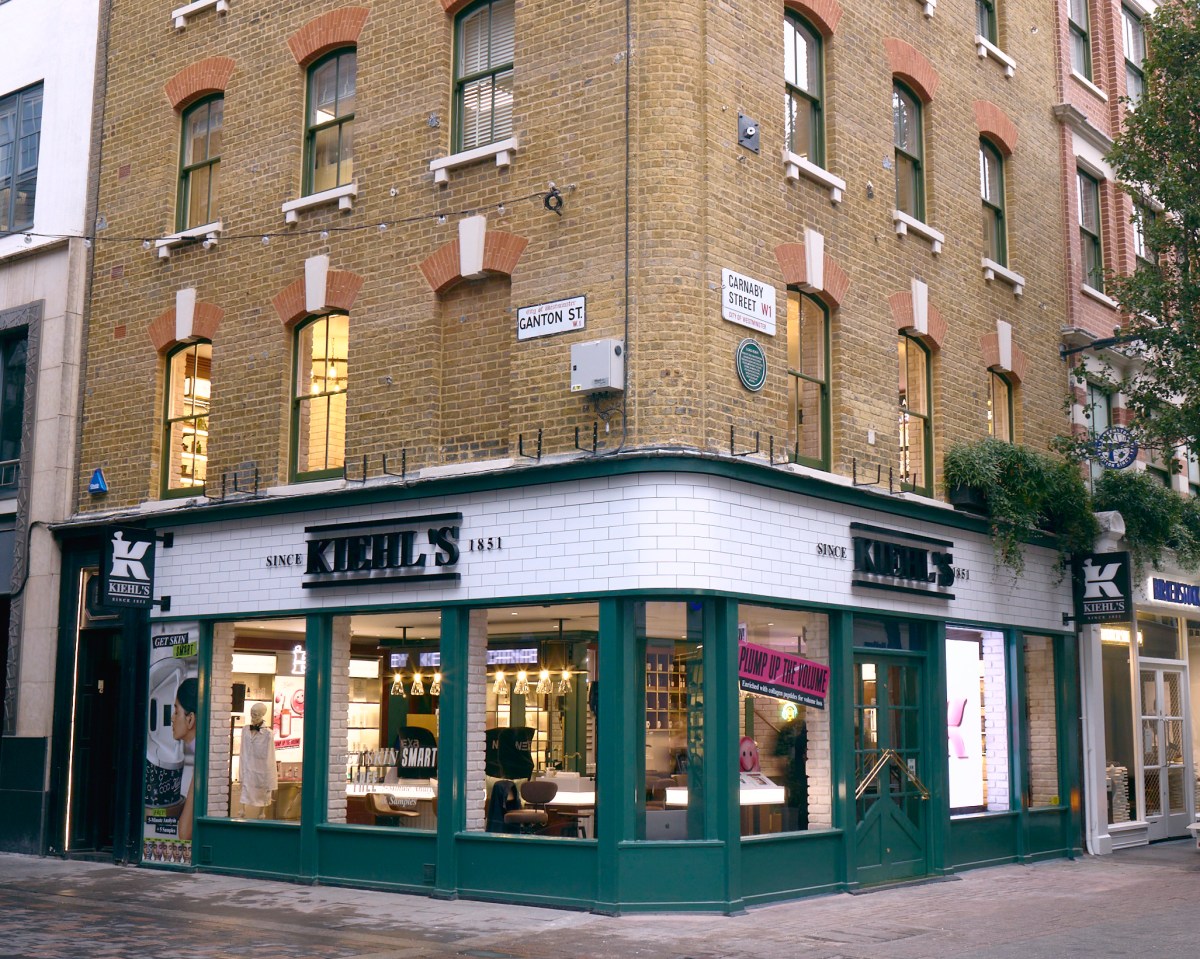
Kiehl's is opening its largest experiential flagship store in Europe on Carnaby Street in London, marking a significant shift in how the heritage skincare brand engages customers beyond traditional retail. The 1,300-square-foot space represents the brand's most ambitious European venture to date, blending its apothecary roots with immersive, digitally-enhanced shopping.
The store architecture centers on three experiential pillars. A content studio allows customers to create personalized skincare content, merging beauty education with social media culture. A mood-matching brew bar lets shoppers explore the brand's serums and treatments through interactive consultation, positioning skincare as a curated experience rather than a transaction. An in-store skin analysis tool completes the trifecta, using technology to personalize product recommendations in real time.
The Carnaby Street location carries symbolic weight. The iconic London street has long functioned as a barometer for retail innovation and cultural relevance. Kiehl's choice to anchor its European flagship here signals confidence in experiential retail even as traditional brick-and-mortar faces headwinds. The brand, owned by Estee Lauder Companies, has built its identity on ingredient transparency and apothecary storytelling since its 1851 founding in New York. This new store amplifies those narratives through immersion rather than passive display.
The timing reflects broader industry trends. Beauty brands increasingly recognize that Instagram-era consumers expect stores to be content destinations, not just points of sale. Drunk Elephant, Glossier, and Augustinus Bader have all invested heavily in experiential flagships that double as photo opportunities. Kiehl's move signals that heritage brands understand they must compete on experience as fiercely as on product efficacy.
The brew bar concept deserves particular attention. Rather than simply selling serums, the bar frames skincare consultation as a personalized ritual, echoing how premium food and beverage sectors use craft narratives to justify price points. This approach transforms the 10-minute checkout into a 30-minute exploration, increasing both dwell time and basket size while building emotional attachment to the brand.
The in-store skin analysis technology represents practical innovation. Many customers remain uncertain which Kiehl's products suit their skin type, despite the brand's decades of dermatological credibility. Real-time analysis removes friction from the decision process. Whether the technology represents genuine diagnostic capability or sophisticated upsell infrastructure remains to be seen, but the consumer benefit is tangible either way.
Carnaby Street's foot traffic will drive awareness. The area attracts 5 million annual visitors, including both London locals and international tourists. A visually distinctive flagship serves as a tourism destination itself, generating earned media through social sharing. For a brand competing against digitally-native competitors like The Ordinary and CeraVe, physical presence and experiential credibility matter.
The London flagship also tests a template. If successful, the model will likely roll to other European capitals and potentially to North America, where Kiehl's flagship on Madison Avenue could benefit from similar innovation. The store essentially becomes a R&D space for understanding how customers interact with the brand beyond product performance.
Kiehl's positioning itself as a thinking person's skincare brand, one that respects ingredients and customization. This flagship executes that positioning through architecture and experience. Success depends on whether the experiential layers drive loyalty or simply distract from product quality. For now, the brand has earned permission to test the theory on London's most visible retail street.