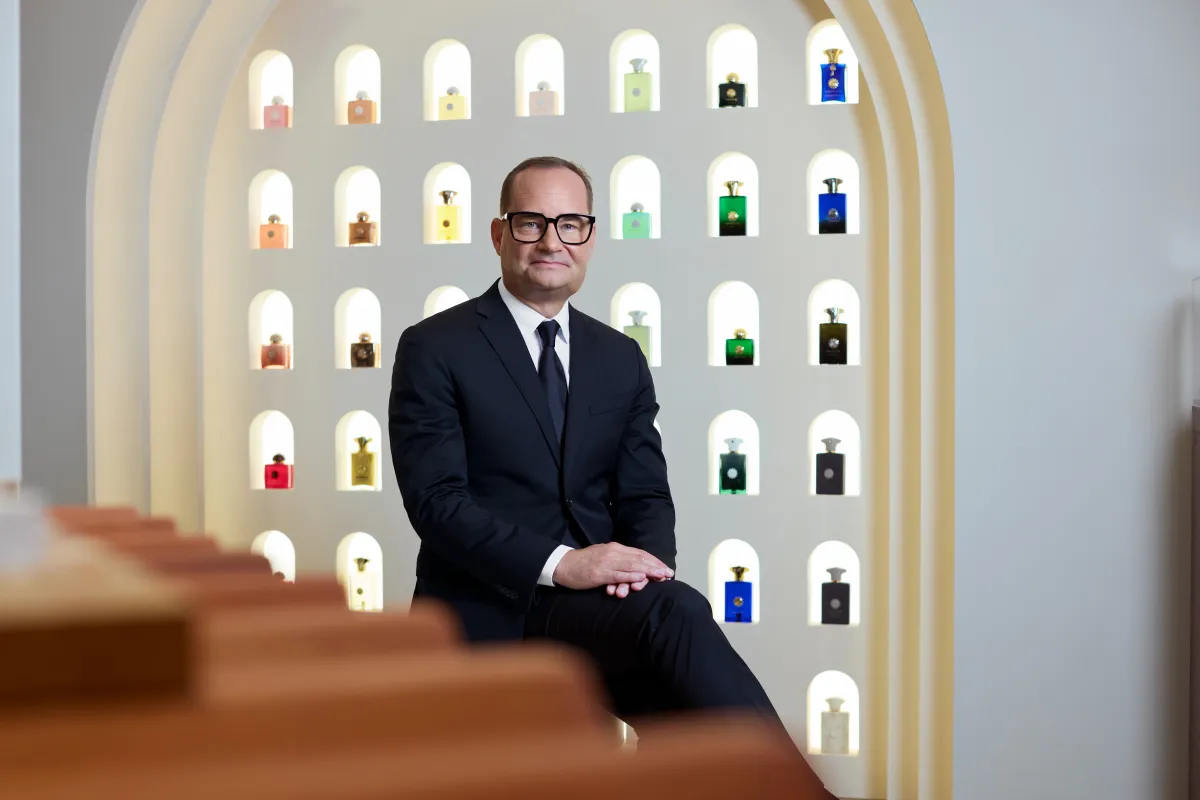
# Marco Parsiegla Steers Amouage Through Luxury Fragrance's Most Demanding Market
Marco Parsiegla took the helm of Amouage, the Omani luxury fragrance house, at a pivotal moment. The brand founded in 1983 carries decades of heritage tied to Arabian craftsmanship and rare ingredients like frankincense, but it competes in a fragrance market where prestige pricing demands relentless innovation and storytelling.
Parsiegla's leadership focuses on what drives Amouage's engine: authenticity rooted in Oman's perfume traditions and the brand's commitment to using high-concentration fragrance oils that rival niche houses costing twice as much. Unlike mass-market competitors who rely on celebrity endorsements and marketing spend, Amouage trades on the legitimacy of its production methods and ingredient sourcing.
The fragrance industry has splintered dramatically over the past five years. Prestige houses face pressure from indie brands offering lower price points with equally complex compositions. Direct-to-consumer models threaten traditional department store dominance. Meanwhile, Gen Z consumers research ingredients obsessively before purchasing, making opacity around formulation a liability rather than a luxury signal. Parsiegla must navigate this landscape while honoring Amouage's position as a true niche player, not a mass-market pretender.
Amouage's fragrance collection balances commercial appeal with artisanal credibility. Bestsellers like Dia Man and Reflection Woman sell well globally, but the brand's real business lever lies in educating consumers about olfactory complexity. Each fragrance tells a narrative tied to Omani heritage, from the spice routes to desert landscapes. This storytelling approach converts educated consumers into brand loyalists who accept premium pricing because they understand what they're buying.
Distribution remains central to Parsiegla's strategy. Amouage maintains selective retail placement through high-end department stores and specialty fragrance retailers, avoiding the dilution that comes from mass-market channels. This scarcity model reinforces the brand's exclusivity, though it limits volume growth. The balance between protecting brand equity and expanding market reach defines his tenure.
The CEO faces headwinds from economic uncertainty and shifting consumer spending on discretionary goods. Luxury fragrance historically proves resilient during downturns because fragrance is affordable luxury compared to jewelry or handbags. A single 100ml bottle costs $150 to $200, making it accessible to upper-middle-class consumers who cut back elsewhere. Amouage's positioning within this tier gives it stability, but only if the brand maintains its perception of genuine craftsmanship.
Parsiegla's challenge extends beyond product. The fragrance category increasingly demands transparency around sustainability and ingredient sourcing. Amouage's reliance on natural oils from Oman positions it favorably here, but supply chain vulnerabilities in raw material sourcing affect margins and consistency. Rising frankincense prices reflect broader pressures on traditional ingredient markets.
The CEO's success hinges on defending Amouage's niche while growing volume without compromising the brand's identity. This requires resisting pressure to collaborate with celebrities or launch mass-market flankers that dilute brand positioning. It means investing in retail experiences and digital storytelling that educate new generations about what separates Amouage from flanker-heavy competitors. In the luxury fragrance market, authenticity sells. Parsiegla's job is protecting it.