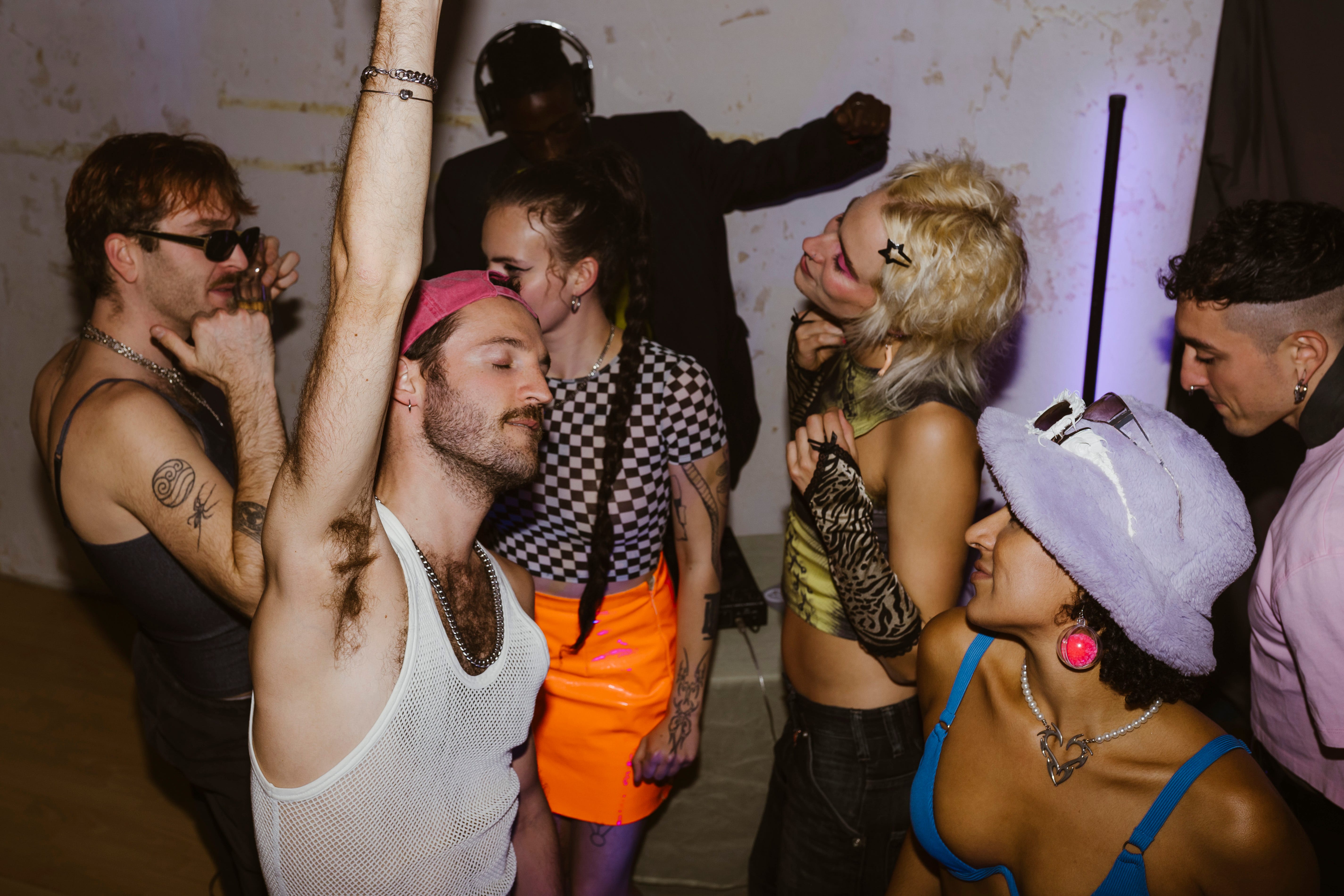
# Who Is Grindr For These Days?
Grindr has spent nearly two decades reshaping how LGBTQIA+ communities connect, but the app's identity has narrowed considerably. Once positioned as a platform for all gender-nonconforming and queer individuals, Grindr now carries a reputation as primarily a gay men's dating app. That shift reflects both market forces and the real needs of its largest user base.
The app launched in 2009 with broader aspirations. Its geolocation feature solved a practical problem for marginalized communities: finding other queer people nearby, safely and discreetly. Trans women, non-binary users, and lesbian women joined alongside gay men. But over the past 15 years, the demographics changed. Gay men dominated the user base, and the app's cultural footprint became synonymous with gay male dating culture.
This narrowing happened partly by design and partly by accident. Marketing priorities shifted toward the largest revenue segment. The interface evolved to prioritize body type, age, and sexual preference categories that appealed most to cis gay men. Features targeting other communities faded into the background. Dating apps like HER carved out dedicated space for lesbian and queer women. Trans-specific platforms emerged to serve that community directly. Grindr's market positioning solidified around one demographic.
The business case was straightforward: concentrate resources where users congregated and engagement ran highest. Gay men represented Grindr's most active cohort and highest spenders. Every algorithm tweak, new feature, and marketing dollar flowed toward retaining and growing that audience. Other LGBTQIA+ users adapted, moved elsewhere, or quietly exited.
That strategy worked financially. Parent company San Vicente Ventures acquired Grindr in 2020 and has pursued aggressive expansion plans. The app now boasts millions of users globally and operates as a profit-focused platform rather than a community-first service. Recent moves include the introduction of subscription tiers like Grindr Unlimited and partnerships with brands seeking access to gay male consumers.
But this repositioning carries costs. Trans and non-binary users report feeling unwelcome on a platform built partly for them. Safety concerns persist around data privacy and consent, particularly for users in countries where homosexuality remains criminalized. Grindr's shift toward mainstream dating app conventions and commercial partnerships has made some long-time users question whether the platform still serves its original mission.
The question of who Grindr serves today matters beyond the app itself. It reflects how venture capital reshapes digital communities. Once a scrappy tool for survival and connection, Grindr became a scalable business. Scaling required focus. Focus meant consolidation. Communities that didn't fit the growth strategy were either neglected or abandoned.
Other LGBTQIA+ platforms have emerged to fill those gaps. Jack'd, Scruff, and others target different niches within queer communities. But Grindr's dominance and mainstream recognition make it the default for many. The app remains useful for gay men seeking quick connections. For everyone else in the LGBTQIA+ spectrum, Grindr is increasingly a platform for them to navigate carefully, not confidently.