# Justin Bieber Performs Surprise Concert at MacArthur Park to Support LA Homeless Community
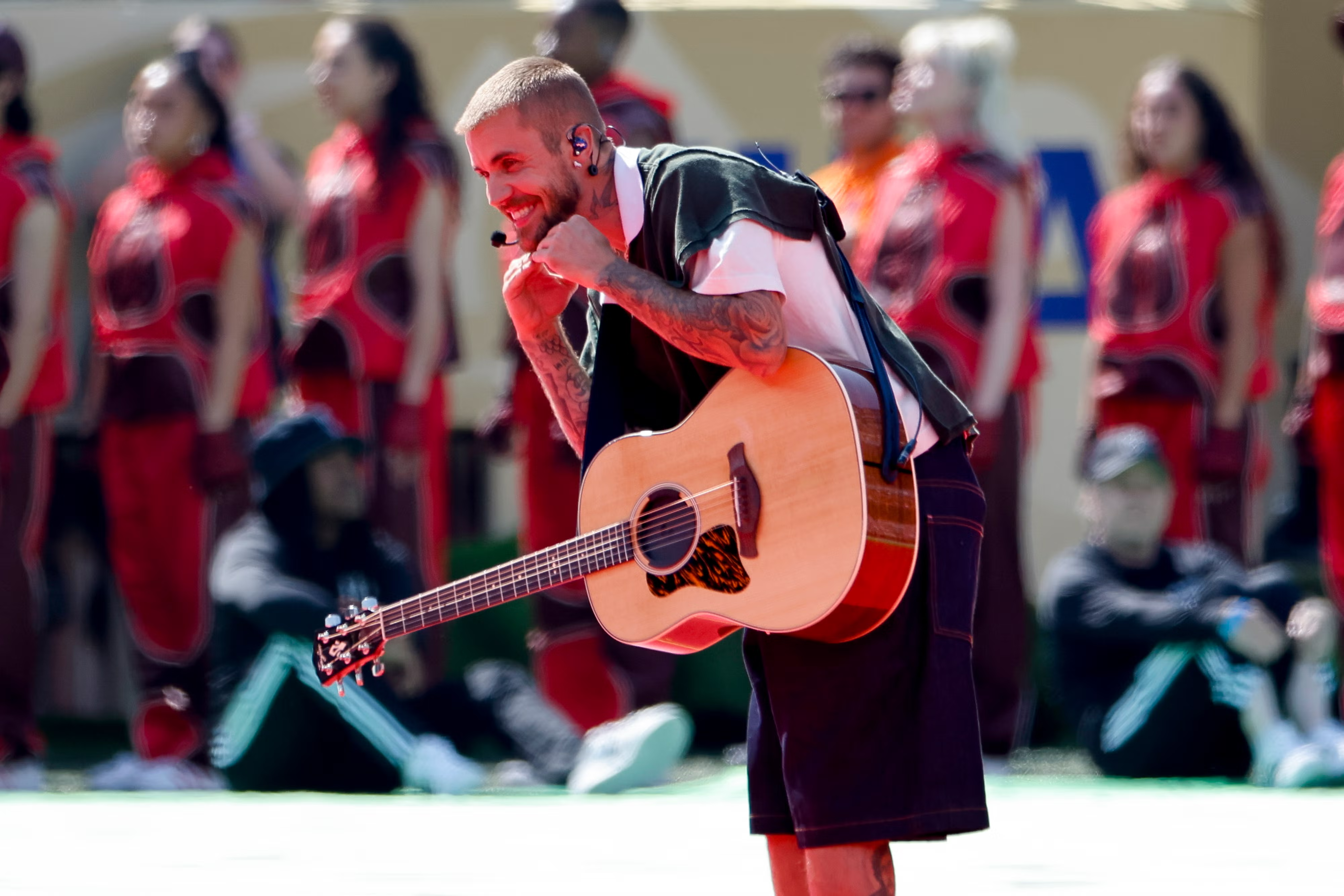
Justin Bieber staged an unannounced performance at MacArthur Park in Los Angeles, directing attention and resources toward the city's homeless crisis. The pop star chose the downtown location deliberately, transforming a public space into a platform for advocacy rather than spectacle.
The low-key nature of the event signals a shift in how celebrities approach charitable work. Rather than organize a high-ticket benefit gala or corporate partnership announcement, Bieber performed in the community itself, meeting people where they are literally and figuratively. MacArthur Park sits in the heart of downtown Los Angeles, an area that has become emblematic of the region's homelessness problem.
Bieber's choice reflects growing pressure on celebrities to use their platforms more authentically. Instagram-friendly charity events have faced criticism for centering the donor rather than the cause. A surprise performance in a public park avoids the performance of charity while still leveraging celebrity capital to draw attention to homelessness in Los Angeles.
The performance serves multiple functions. It generates media coverage for an issue that often gets relegated to local news or policy discussions. It positions Bieber as engaged with real-world problems affecting his city. And it creates a moment for people experiencing homelessness to access entertainment and community resources without barriers like ticket prices or venue requirements.
Los Angeles homelessness statistics remain dire. According to the most recent counts, over 40,000 people experience homelessness in LA County, with significant concentrations downtown. MacArthur Park specifically has become a focal point for street outreach and community services, making it a strategically meaningful location for a high-profile appearance.
The surprise element matters too. Announced benefit concerts allow news cycles to move past the event quickly. Unplanned performances generate organic social media discussion and word-of-mouth momentum. For someone like Bieber, who commands millions of followers, the viral potential amplifies the message exponentially.
Celebrity involvement in homelessness advocacy remains uneven. Some artists donate quietly through foundations. Others participate in organized efforts like the Los Angeles Homeless Services Authority initiatives. Bieber's approach sits somewhere between: public enough to matter, intimate enough to feel genuine.
The timing also carries weight. Major cities face mounting pressure to address homelessness as a policy priority. When celebrities activate around the issue, it influences public opinion and political will. A surprise concert doesn't solve systemic problems, but it places homelessness squarely in the cultural conversation at a moment when policy solutions remain contested and underfunded.
What happens after the performance determines whether this constitutes meaningful advocacy or PR. Real impact requires sustained engagement, funding commitments, or advocacy for policy changes. A one-time event generates awareness. Repeated action creates pressure.
Bieber's MacArthur Park performance demonstrates that celebrity support for homelessness can take forms beyond traditional charity infrastructure. It also shows that even surprise, low-key events attract attention when they involve major public figures. For a community often rendered invisible in mainstream media, that visibility matters.