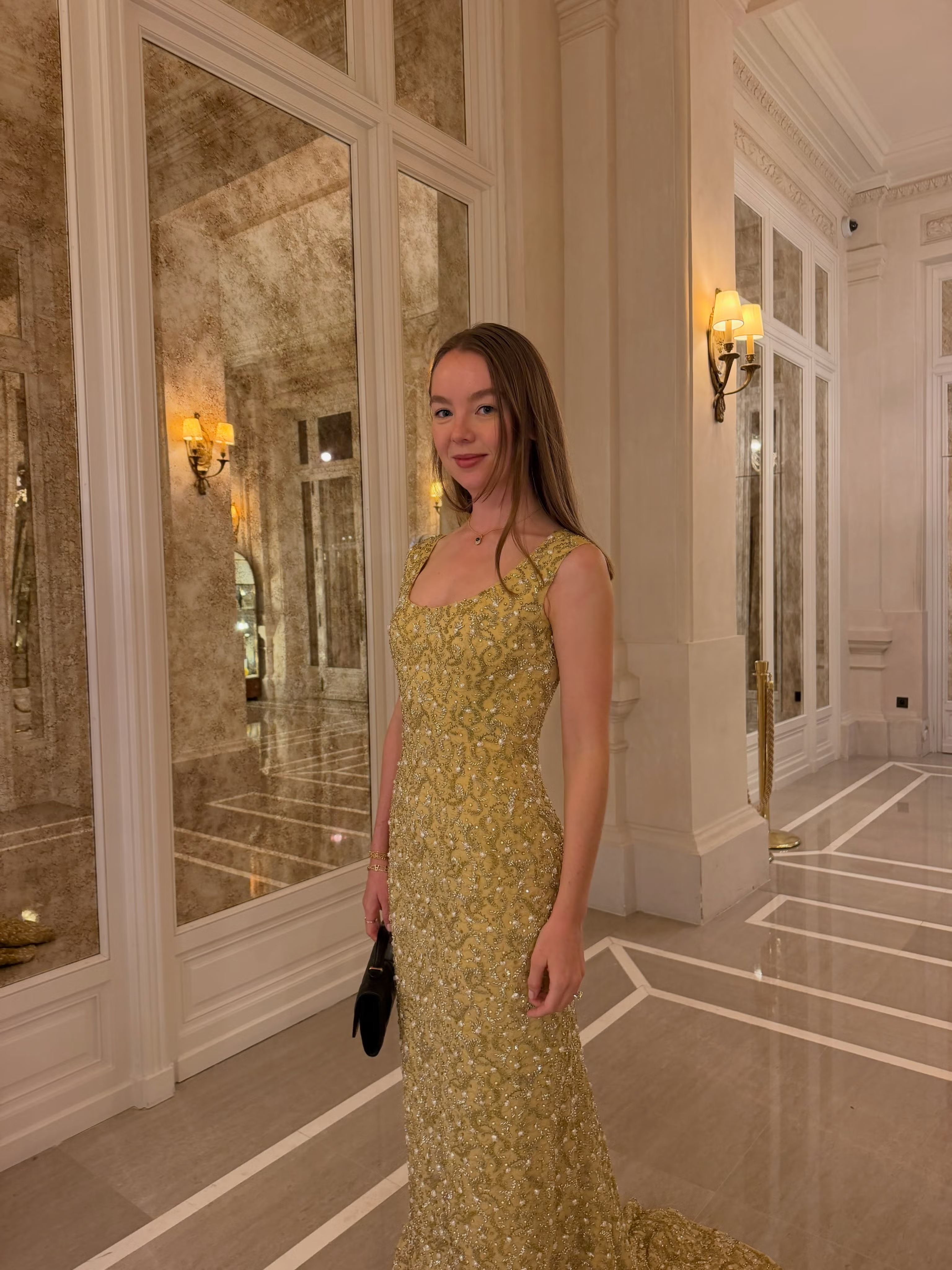
Princess Alexandra of Hanover wore her grandmother Princess Grace Kelly's archival Givenchy dress to a recent event, turning heads in a piece of documented royal fashion history. Grace Kelly, who became Princess of Monaco after her 1956 marriage to Prince Rainier III, originally wore the gown to a notable royal wedding in her own era. The choice carries weight beyond mere aesthetics. It represents a direct lineage connection between generations of European royalty and a deliberate nod to one of fashion's most enduring icons.
Grace Kelly's relationship with Givenchy shaped Hollywood and royal dressing for decades. The designer created custom pieces for her throughout her film career and into her life as Princess of Monaco. Her silhouettes, refined restraint, and impeccable tailoring became synonymous with understated elegance. When Kelly wore Givenchy, she wasn't simply selecting a dress. She was endorsing a philosophy about how royalty should present itself to the world.
Princess Alexandra's decision to resurrect this archival piece signals a broader trend among younger royals. They increasingly mine family archives rather than defaulting to new commissions. This approach serves multiple purposes. It honors family legacy, reduces fashion waste by recycling existing garments, and creates instant narrative around events. When a young royal wears grandmother's dress, the story writes itself.
The specific gown carries provenance that matters to fashion historians and royal watchers alike. Archival pieces from Grace Kelly's personal wardrobe rarely enter public circulation. Museums and private collections guard them carefully. That Alexandra wore it publicly transforms it from artifact to active wardrobe piece, breathing new life into a garment that might otherwise remain locked away.
Givenchy continues to hold court in royal circles, though new designers now dominate headlines. Recent generations of European royalty favor contemporary designers for everyday events, yet heritage moments still call for established houses. The label's archive represents not just clothing but visual documentation of 20th-century elegance standards.
Alexandra of Hanover operates within this complex space between old money European royalty and contemporary fashion awareness. As the daughter of Ernst August of Hanover and Princess Caroline of Monaco, she sits at the intersection of multiple royal houses. Her fashion choices carry expectations from multiple directions. Wearing her grandmother's dress satisfies those seeking tradition while avoiding accusations of excess by choosing something previously owned.
The dress itself likely reflects Givenchy's signature elements from the era. Think structured bodices, refined fabrics, and architectural silhouettes. Grace Kelly favored clean lines over embellishment. She understood that restraint reads as confidence. These principles translate across decades more successfully than trend-focused pieces.
Fashion recycling among royals carries different weight than it does among celebrities or everyday consumers. When a royal wears a significant archival piece, it becomes a statement about values and continuity. The act carries almost ceremonial weight. It signals respect for what came before while asserting the wearer's own place in that continuum.
Princess Alexandra's choice reflects a maturing royal generation unafraid of fashion history. Rather than viewing old pieces as dated, she recognizes their storytelling potential. The dress becomes more than silk and seams. It becomes a conversation between generations, mediated through fabric and design.