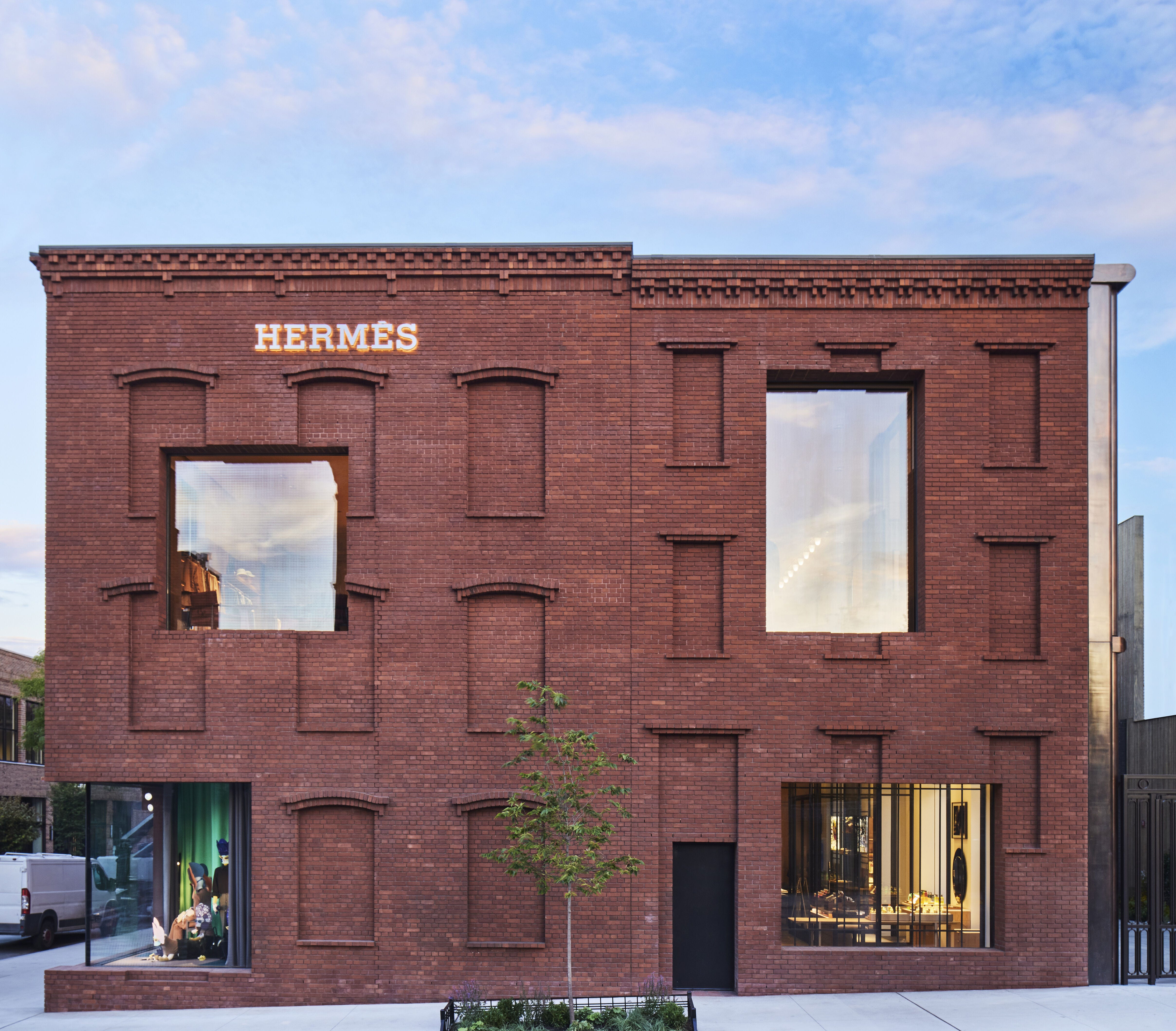
# Hermès Hits Home in Brooklyn
Hermès opened a loft-style boutique in Brooklyn, marking a significant shift in how the luxury house approaches retail in the United States. The new store represents a departure from the brand's traditional flagship format, embracing a more intimate, residential aesthetic that reflects the neighborhood's creative character.
The Brooklyn location signals Hermès' recognition that luxury consumers outside Manhattan want accessible luxury retail without the stuffiness of Fifth Avenue flagships. The loft-style design creates a lived-in atmosphere, with exposed brick, wooden beams, and a layout that feels more like browsing a collector's personal space than walking through a corporate storefront. This approach mirrors how contemporary luxury brands increasingly blur the line between retail and lifestyle destination.
For beauty and fragrance customers specifically, this matters. Hermès builds significant revenue from its beauty division, particularly fragrances like Jour d'Hermès and H24. The brand's skincare collection and makeup offerings gain visibility in these intimate spaces where customers linger longer, experiment with products, and absorb the brand narrative beyond price tags. A Brooklyn loft reads differently than a marble temple in Midtown. It communicates accessibility and curiosity rather than gatekeeping.
The store also reflects where affluent consumers actually live now. Brooklyn has become home to established wealth alongside new money, creative professionals, and fashion industry workers. Hermès placing a significant retail investment in the borough acknowledges this demographic shift. It also competes directly with emerging luxury retailers and independent boutiques that have thrived by offering curated, personable shopping experiences.
Retail design in luxury fashion has evolved dramatically over the past five years. Brands like Louis Vuitton and Gucci have experimented with pop-ups, smaller format stores, and neighborhood-specific designs. Hermès typically moves slower on retail innovation, preferring to maintain exclusivity through limited locations. The Brooklyn opening suggests the house recognizes that exclusivity in 2024 means something different. It means being where discerning customers actually shop, not forcing them to travel for access.
The loft aesthetic also aligns with Hermès' broader brand positioning around craftsmanship and timelessness. Raw materials, visible construction details, and an emphasis on quality over flash fit naturally in a loft environment. Beauty products displayed here gain context. A Hermès fragrance sits on a shelf next to art books and carefully selected objects, not among dozens of competing brands under fluorescent lighting.
For Brooklyn specifically, the location represents a vote of confidence in the borough's continued relevance as a cultural and commercial center. Five years ago, luxury houses remained skeptical about investing in outer boroughs. That hesitation has dissolved. Brooklyn now hosts flagship-level retail from established luxury brands alongside the independent retailers that made it appealing in the first place.
The store's impact extends beyond sales figures. It sets a template for how heritage luxury houses can maintain exclusivity while expanding accessibility. The Brooklyn location likely won't cannibalize sales from Hermès' Manhattan stores. Instead, it captures customers who prefer their luxury experiences without the Manhattan ritual, who want beauty and accessories presented in context rather than in isolation.