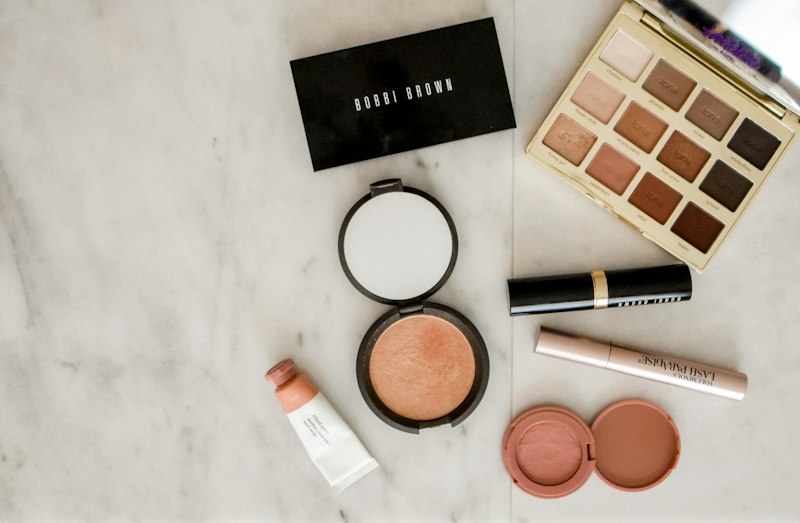
Most coverage treats the recent wave of direct-to-consumer makeup launches as isolated market entries. A new brand drops, gets some influencer attention, sells out a few SKUs, and we move on to the next launch. It is better understood as a signal of what comes next: a reckoning that will thin the herd of independent makeup lines by half, maybe more.
The numbers tell a story that the beauty press keeps missing. We are in the middle of a saturation crisis disguised as growth. Yes, the beauty industry is expanding overall. Yes, indie brands have carved out real shelf space in a market once dominated by legacy conglomerates. But the actual economics of running a small makeup company have fundamentally changed, and most founders have not caught up.
Launch a makeup line today and you face immediate headwinds that simply did not exist five years ago. Manufacturing costs have risen. Shipping has become exponentially more expensive. Social media advertising, once a founder's shortcut to visibility, now requires spend that only well-capitalized brands can sustain. The barrier to entry looks low until you try to scale, at which point it becomes punishing.
Consider the supply chain picture. Indie brands typically work with contract manufacturers who demand minimum order quantities measured in thousands of units per formula. That was manageable when a single TikTok video could generate enough buzz to move inventory. It is far less manageable now that the novelty has worn off. The market is flooded. Consumers have options. And options mean indie brands are competing on something other than mere existence.
This is where it gets uncomfortable for the current crop of founders. Most indie makeup lines launched in the past few years operate on razor-thin margins. They depend on sustained momentum. They need consistent velocity. They cannot afford to sit on inventory. Yet that is exactly where many of them are heading: holding dead stock while trying to figure out why the algorithm stopped working.
The consolidation phase is already starting. We are seeing the early signs in how legacy companies are quietly acquiring indie brands or talent. They are moving deliberately, picking off the ones with real differentiation or loyal customer bases. The rest will languish or fold. Some founders will quietly shut down operations. Others will try to pivot into adjacent categories or distribution models. A few will get lucky and find a sustainable niche.
What makes this a signal rather than a trend is simple: the math does not change. Unless manufacturing becomes cheaper, shipping becomes cheaper, and customer acquisition becomes cheaper, the economics remain punishing for all but the most disciplined operators. Those conditions are not on the horizon. If anything, expect the opposite.
The beauty industry loves a comeback story. It loves an underdog with a great product and a following. But love does not move inventory at scale. Love does not pay for production runs. Love does not sustain a business when margins compress and competition intensifies.
The founders launching makeup brands today should be asking themselves hard questions. Not whether their product is good. But whether they have the capital, the supply chain sophistication, and the distribution strategy to survive the next eighteen months. Most will not have honest answers. Many will find out the hard way.
This is not pessimism. This is pattern recognition. The indie makeup boom was real. The correction will be equally real.